
Sign up for our free monthly news and story alerts |
AIRLINE REVIEW Pod beds and lie-flat premium economy seats in aerial slugfestA tough battle is being fought for your bottom, 30,000ft aloft. Who has the widest economy class seats and best premium economy? Air New Zealand's SkyNest bunk beds are delayed to mid 2026 as Cathay perks up its B777-300ER with top quality Premium Eco seats. Think THAI's new lie-flat premium economy plus, Air India's A320neo premium seats and Qantas leg stretchers on the A350 ultra long haul routes to New York and London early 2027.    by Vijay Verghese partial updates by Staff Reporters March 2026 SEE ALSO First Class Seat Survey | Business Class Seat Survey | Small Airlines Guide | Airbus vs Boeing | Frequent Flier Programs | B737 MAX-8 safety issues | Round the world fares | Top Asian hotel reviews | Airline Bailouts 
A battle is being waged for your bottom as airlines redesign, and even narrow, seats. THAI Airways reconfigures old Virgin A300-330 aircraft to introduce lie-flat premium economy (left) and Air India brings premium economy to its A320neo fleet with added comfort and space. JUMP TO Singapore Airlines vs Cathay Pacific | Leg room | Secret seat tips | Seat configuration | Seat recline | Entertainment SHOEHORNED like an American bison in a Barbie Doll seat, 30,000ft aloft on an interminable nonstop to New York, wondering how you’ll ever extricate yourself to get to the loo before the post-movie rush? Well, it’s time to whip out the measuring tape and get to the bottom of things. How wide is your seat really? How much footsie space do you have in front of you? Does your seat actually recline or must you travel in the brace position all the way to New York? Finally, an airline economy class seat survey with all those niggling details. Send us your Feedback / Letter to the Editor
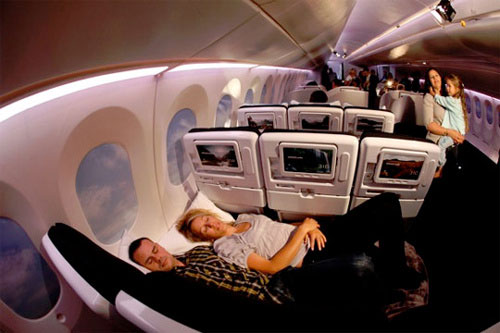
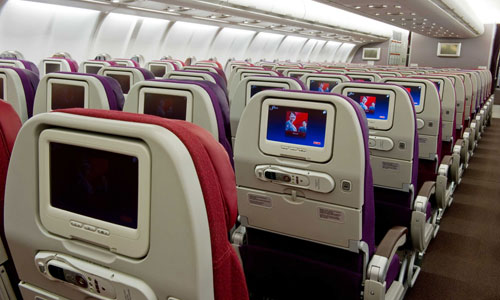
Some Asian region airlines are shaking things up with new economy class configurations. THAI Airways International has reconfigured three Virgin Atlantic A330-300 aircraft operating from Bangkok's Suvarnabhumi Airportfor services to destinations like Mumbai, New Delhi and Fukuoka from 26 October 2025. The three repurposed aircraft offer the old Upper Class seats in a 1-1-1 configuration as an entry level 'business' experience in the form of 31 lie-flat seats in a premium economy plus cabin. Look forward to premium dining, extra legroom and better inflight entertainment. There are also 48 standard premium economy seats and 185 seats in the regular economy class. Qantas will roll out its new 'Project Sunrise" economy class seats on Airbus A350-1000ULR aircraft flying Sydney to New York and London early 2027. Expect a 3-3-3 configuration, 33-inch seat pitch for long legs — the roomiest in the airline's fleet — a six-point adjustable headrest for weary necks and shoulders, two USB C ports for recharging devices, expanded shelf space, and a 13.3-inch high definition video screen similar to that in premium economy (with Bluetooth connectivity). Premium economy on the A350s meanwhile will serve up the largest 40-inch seat pitch. Interesting specs but a disappointingly dull flat grey presentation that may well change by delivery time. The aircraft also features a 'Wellbeing Zone' for all passengers with self-serve refreshments and stretch space for cramped limbs. Terrific news for the deep-vein-thrombosis challenged is that lie-flat economy bunk beds will be available on Air New Zealand. Its Skynest 'pods' were due for launch end 2024 but have been delayed to early 2026. Situated between economy and premium economy, the pods will be available for starters on 17-hour flights from Auckland to New York from September 2024. There's a catch though. Passengers will be able to book them for four hour stints so a great number have a chance to catch up on one good deep sleep cycle. All this for around US$250-$400. Look for these on the reconfigured B787s. Aircraft technology and design has made remarkable strides, alas almost none of it in the realm of passenger seat comfort. The B737 for instance that launched in 1964 with a cabin width of 11 feet and six inches and 124 seats, has extended the 'tube' but at the same width for the B737MAX10 with around 240 seats with no respite on seat width which, by necessity, needs to stay at roughly 17 inches. The Airbus A321 and the A320NEOs offer a modestly wider cabin that affords seat width of around 18 inches. Every inch counts. Let’s check out those seats in the back. Let’s start with legroom. In airline parlance this is called “seat pitch”. Specifically this refers to the space between each seat anchor, row by row. This can fluctuate even in the same class especially as you move further up to the nose or tail of the aircraft. Wide-body aircraft, like the businessmen who fly them, are widest around the middle. Cabin space is restricted at either extremity and this can affect both seat pitch and seat width – unless you’re flying business or first, of course. Economy class seat pitch in either Boeing or Airbus aircraft hovers in the 31 to 34-inch range, with a few of the economy ‘plus’ ranges offering a half-way-to-business-class 38 inches. It is, however, a fallacy to assume that a fat B747 will offer more legroom than a smaller A330. Space depends on the airline’s configuration. A couple of airlines stand out from the crowd. New aircraft like the A320neo are getting a workup too. Air India in 2024 started introducing a 3-class configuration on this aircraft for domestic and short-haul international routes. The 3-3 premium economy will feature roomier seats with better upholstery and a 32-inch seat pitch. Find a flexible headrest, a four-inch recline, and a USB charging port. The Air India A320neo ergonomic economy seats will offer a seat pitch of between 28 and 29 inches with a four-inch seat recline, USB port and hook for your coat. This is a 3-3 seat configuration as in premium. SIA vs CX head to headThe Singapore Airlines (www.singaporeair.com) long-haul mega-carrier, the Airbus 380-800 economy class seats weigh in with a 32-inch seat pitch, 18.6 inches of width and a 115-degree recline. As in other aircraft, A380 economy seats are pale blue and cream, mixed up with brown and tan cabins in a 3-4-3 configuration that might be a tad tight for some. There's plenty of light and overhead storage space and the champagne mood lights will help. Knee room is ample, there's a jacket hook, and a small compartment behind the flip-down cup holder for spectacles and phones. By contrast, the B777 economy seats have the appearance of greater space with higher ceilings in cabins. On Air WiFi is available after sign-up. But who needs seats on an aircraft this size anyway? Go for a stroll, and don’t forget to carry a map. The B777-300ER in a 3-3-3 configuration offers a 18.6-inch seat width and a 115-degree recline. Power supply is available in most seats – two for every three seats or three for every four seats – and the touchscreen PTV screen size is a generous 11.1 inches (compared with 10.6 inches on the older B777-200s). Seats also have USB ports. The teal and grey industrial chic decor is soothing and contemporary, a far cry from the earth tones and gold of earlier generation B777-200 aircraft. Economy class seats on B777-300ERs are comfy enough though with extra space and leg room in bulkhead rows. Find backrest cushions and a moulded headrest with better neck support for those long transpacific flights. Expect a padded arm bolsters and entertainment by way of the airline's much-applauded KrisWorld with on-demand movies and music on a large video LCD touch screen with handset. The touchscreen remote is modern, minimalist, and classy and functions as a monitor too, or a games console. This is a far better in-flight entertainment set-up than Cathay's - SIA's closest Asian rival in this department. The earphones are wrapped in plastic and are the earplug (mobile phone) variety that may not suit all ears as they can pop out from time to time. The sound quality is nevertheless excellent. As of December 2016, in B777-300ER economy class - set 3-3-3 - bulkhead exit row 31ABC and 31KJH were the seats with the most leg-room. Or pick Row 44 (thoigh watch for the door bulge along window seats). The aisle seats offer the maximum wiggle room. On the older B777-200 aircraft the economy seat configuration is 3-3-3 with bulkhead rows 31 and 44 offering the most leg-stretch rooms. The seats feel a tad tight on account of the embedded armrest remote that digs into your hips and may snag bulky wallets. Enjoy OnAir WiFi in-flight at US$25 per day via Starhub, or pay per sector. This is for entertainment only and no voice calls can be made. There's a lengthy sign-up sequence in which you'll fill in credit card details and more. As the disclaimer readers, "Connection speed depends on the number of people using the service." You may switch between mobile devices during the same purchase session. The WiFi kicks in when the plane touches 10,000ft and an e-mail with the purchase receipt will be sent to you for your office accountants. You may use the headset remote to make ground calls while flying. There are two options and Panasonic offers global coverage while SIA OnAir does not have coverage over India, Africa and South America. The new KrisWorld is based on a state-of-the-art Panasonic Avionics platform. SIA is the launch customer for the next-gen eX3 system that debuts on the A350s, with the current B777-300ERs boasting several eX3 features. All eyes are on the A350 Ultra Long Range version that helped SIA launch the longest nonstop route in the world, beating the Perth-London Qantas feat with a Dreamliner B787-9. The new long-range A350 aircraft ensures all seats have a window (not between rows or gone altogether) and there is a significant lack of draft as the air is recirculated and purified. The pathfinding flight - Changi to Newark - took off on 11 October 2018 covering 15,000km in under 19 hours, an epic feat for engineers, pilots and passengers alike. There is stretch room on the aircraft with no economy seats, just premium economy and business. Several Boeing 777s on Cathay Pacific (www.cathaypacific.com) routes offer the additional distraction of a nosewheel camera - now de rigueur on new generation aircraft - that will have you riveted during take-off and landing. It’s not too bad for boning up on geography either on a clear day. And from 15 September 2016 the airline offered 10kg extra baggage allowance on every class. That's a lot of extra shopping with a 30kg weight limit in economy and 35kg for premium economy. Older Cathay B777s offer 18.5 inches of seat width, the same as British Airways’s World Traveller Plus (www.britishairways.com) section. Now that’s value for money. Alas, by April 2018, Cathay Pacific was introducing narrower economy seats on its B-777s with the announced trade-off of a wider personal video screen (11.6 inches across, up two inches compared to the old format) and added features like USB charging sockets and smartphone and tablet storage space. Cathay B777 seat width on these aircraft drops to 17.2 inches (with more than an inch shaved off). Narrower seats means the airline can now squeeze in 10 seats abreast per row, adding capacity that is expected to offer an extra annual US$90m in revenue. How passengers react to this move remains to be seen but we are not in favour of over-cramped cabins on a 'premium' airline at a time when standards appear to be dropping. The airline may get away with it on shorthaul routes catering for group traffic but this could be a deal-breaker on medium haul and long haul services. Seat pitch thankfully remains at 32 inches. The CX B777s, A330s and A340s tend to have a seat pitch of 32 inches. The new economy class on Cathay Pacific offers several additional in-seat features to keep the back well supported and, perhaps, massaged. If knee room is an issue on the old Y Class, whip out the magazines from the seat pocket in front of you and, presto, you’ve got three spare life-saving inches. The new economy class stores your magazines under the seat. Cathay's Premium Economy Class (1 April, 2012) had re-engineered seats with a pitch of 38 inches and improved width and recline. The seats are located in a separate cabin and Premium Economy flyers gain larger pillows, noise cancelling headphones, toiletry kits and a welcome glass of champagne. The Premium Economy experience extends to the ground where passengers can expect a dedicated check-in window, greater baggage allowance and priority boarding. Premium economy passengers will also accrue 110 percent Club and Asia miles. Cathay Pacific's first A350 launched 1 June 2016 on the HK-Manila and HK-Taipei routes. Bangkok and Ho Chi Minh followed 1 July 2016 then HK-London Gatwick (1 September 2016). Long-haul routes followed thereafter on the 280-seat aircraft. Cathay's NextGen Airbus A350 aircraft offers WiFi connectivity (shortly over Mainland China too) at just under US$20 on its longest route with unlimited data. The aircraft also serves up high definition in-flight touch-screen television. Expect mood lighting, controlled humidity and cabin pressure set at a comfortable 6,000ft. New seats are featured in all classes. The CX A350-900 premium economy seating configuration is 2-4-2 (a tad tight in the middle we'd say (avoid seats in the middle, which defeats the whole point of privacy and premium space). There's a modestly roomy seat width of of 18.5 inches, about the size of regular economy - down a wee bit from 19.3" with a 40-inch seat pitch. Yet, recline is an inch more at nine inches. Win some and lose some. Also find wing headrests, a USB port for recharging smartphones, a coat hanger thoughtfully set away from the aisle, and the signature teal blue seats. Inflight duty-free shopping is a cinch with orders being placed directly from your seat using the 12.1-inch touchscreen. Best A350 Premium Economy seats on CX are AC and KH in row 30 with extra legroom. Cathay's economy class seats on the new A350-900 aircraft offer a seat pitch of 32 inches with a seat width of 18 inches (doesn't feel too tight and knee room is pretty okay) and a recline of six inches which, in practice, seems a lot less. The personal TV touch screen is 11 inches across with great clarity and more privacy as immediate neighbours cannot look in on your movies with the screen permitting only front-on viewing. The seat configuration is 3-3-3, which is pretty comfortable if you pick an aisle seat in the centre row. Or opt for the bulkhead row 40 (40C is the top pick) where space is a breeze but you may be sharing with a bawling bassinet baby. The toilets are smart and a tad more roomy with far easier door locks. Best of all, the earphones come with covers already attached so there's no need to fiddle around with the gear. There's USB power should you need it. The tail and belly cameras offer sharp resolution on the new video screens. Watch the take-off and landing. On Cathay Pacific B777-300ER aircraft perhaps the best seats in economy are in Row 39, the first in the economy section at the bulkhead. Pick AC or KH, with aisle seats A and H being the best with serious legroom and a 2-4-2 configuration for this single row on an otherwise 3-4-3 cabin thus offering easy access to toilets without disrupting co-passengers' sleep. Expect more elbow room as well in th aisle seats. Premium economy seats on CX B777-300ER aircraft are roomy with very comfortable seating, USB port, quality leather rim padded headphones, more than ample legroom, good recline, push-button leg support as well as flip down leg rests for the feet. Passengers can expect a simple travel kit, fluffy pillow and a duvet (not blanket) to help the journey speed by. 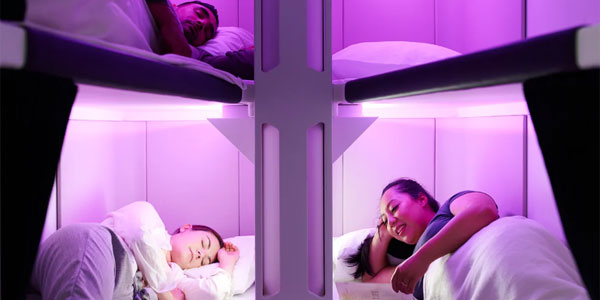
Air New Zealand has come up with its innovative sleeping 'pods' that will be available from early 2026 (pushed back from end 2024) on the ultra-longhaul New York run. The small matter of seat pitch - leg roomThe Emirates (www.emirates.com) B777 and A380 offer a comfortable seat pitch of up to 33 inches, while Philippine Air’s (www.philippineairlines.com) A340-300, B777-300ER, B747-400 and A330s and Asiana Airlines (us.flyasiana.com) B747-400s and B777-200s stretch a wee bit more to 34 inches of leg room. The same pitch is also available on the Thai Airways (www.thaiair.com) fleet, with the A340-500 offering a happy-ending 42 inches in Premium Economy, one of the best in this economy class seat survey, beaten only by the 46 inches of legroom offered in a Turkish Airlines (www.turkishairlines.com) B777 Premium Economy seat. Cathay Pacific’s Premium Economy weighs in with 38 inches of stretch space. Malaysia Airlines (www.malaysiaairlines.com) offers from 30 inches to a generous 34 inches of point-and-flex space as well. MAS economy seats additionally offer manually adjustable lumbar support as well as decent seat-back PTVs measuring up to 9 inches. Air New Zealand (www.airnewzealand.com) mixes things up with seat pitch varying from 31 to 35 inches across its fleet. Luck of the draw really. Garuda Indonesia (www.garuda-indonesia.com) added a brand new B737-800NG in 2011 to its fleet on the Hongkong-Jakarta route (flying in conjunction with an A330-200) and the Hongkong-Bali (Denpasar) route. These aircraft offer a respectable seat pitch of 31 inches and 32 inches respectively, but the 103-degree recline leaves a bit to be desired. Fast-expanding budget airline AirAsia (www.airasia.com) tosses in a seat pitch of 31 to 33 inches with seats averaging a little over 16 inches in width with a 115 degree recline (on longhaul AirAsia X aircraft). The confusion starts with the introduction of intermediate classes; the aforementioned Premium Economy seats, Plus or Super Economies that are vigorously colonising aircraft cabins. If you’re in search of the widest economy class seats and maximum leg room, make this your preferred hunting ground. With the clamour for legroom and seat width, Premium Economy class is finding its way onto more airlines, usually on long haul international routes, offering about five more inches of legroom and a couple of extra inches of bottom cushion space. While Premium Economy seats are generally around 50 percent cheaper than business class, they may cost almost double the economy price depending on booking period or route. However, depending on load factor and perhaps a shorter purchase lead time, the variance may be just around 10 to 20 percent. Some airlines that are experimenting with this product are Air France, Air New Zealand, ANA, JAL, British Airways, Qantas, KLM, Scandinavian Airlines, Thai Airways, Turkish Airlines, United and Virgin (including Virgin Blue). ANA’s Premium Economy is now available on B777-300s flying between Narita and Los Angeles, Washington DC, Chicago, and Munich. In several cases these seats are in a separate cabin, as on Air New Zealand, Virgin, Air France, Qantas and BA. Seat pitch on Air New Zealand climbs up to a possible high of 40 inches depending on aircraft. Look forward to better food in some instances as well as priority boarding. As of September 2017 Virgin Atlantic claimed to be the first carrier in Europe to be offering WiFi on all routes in-flight with Panasonic and Gogo tech. On a B787 flying Hong Kong to London basic WiFi costs £4.99 for 40MB of data while £14.99 for 'WiFi Max' offers 150MB of data. On other aircraft types, Virgin also offers a message pass at just £2.99. Meanwhile Delta from 1 October 2017 offers free messaging on WhatsApp and other text applications with full USA coverage. No mobile phone calls yet. Cathay Pacific has joined the fray and Premium Economy seats have been ushered in on all of its long haul aircraft: Boeing 777-300ERs, B747-400s, Airbus 330-300s and A340-300s. By 2016, Premium Economy seats were selling on several aircraft featuring better meals, enhanced service and far more seat width and leg room on routes from Hong Kong to North America, Europe and Australia. It must be noted however that by early 2016, surprisingly, Premium Economy seats were no longer being offered on HK-India routes including to New Delhi and Mumbai. The seats are the equivalent of regional business class and worth the extra green rustle. Singapore Airlines' new premium economy seats offer an eight-inch recline with press-button legrest fold-out, more flying privileges and food choices. Generally speaking, Turkish Airline’s (www.turkishairlines.com) Comfort Class beats the rest of the world with a bit more than a hypnotic belly dance to boast 46 inches of seat pitch – that’s about the biggest leg room space for a good stretch that you are likely to get. The Turkish delight continues with cushy seats measuring 19.6-inches in width and personal TVs with 10.6-inch screens that pop out of the armrest. There are also plug-in points for USB devices and iPods. If the thought of all those rippling tummies leaves you breathless, put your feet up on your very own leg rest, which you’ll find stowed neatly under the seat. Comfort Class is currently available on B777s only. Whatever is said about the in-between classes, the big daddy when it comes to Economy class legroom is Qantas (www.qantas.com.au). Forget the noise about surly service and remember this is Australia – you get what you’re given. Which, in terms of leg room in Premium Economy on newest fleet addition A380 is up to a humungous 42 inches. This will have seven footers packing their bags and heading straight for Sydney. The new A380, what Lesley Grant, Qantas Executive Manager, terms “an aircraft that will remain the flagship of the Qantas Group” has 332 Economy seats and 32 Premium Economy seats. {Delta from 1 October 2017 offers free messaging on WhatsApp and other text applications with full USA coverage. No mobile phone calls yet In the seat pitch Olympics, Thai Airways comes in joint second, matching Qantas with a generous 42 inches in the A340-500 Premium Economy section. Regular economy class seats on the THAI A380-800 are bright, in variegated purple and pink shades with more knee room and a powder grey cabin. Expect mood lights, USB power, quick-reaction smiling staff who seem pleased to present their "new baby", ergonomic chairs, a wider LCD screen with a good mix of inflight entertainment and location maps (with tail-mounted camera views that show off the impressive bulk of the plane to full effect), and a seat configuration of 3-4-3 in the lower deck and 2-4-2 in the upper deck. Upper deck seats 76AB and 76JK offer bulkhead leg stretch and cosy twosome window corners. In the lower cabin the exit row of choice is 55 with 55ABC offering the best legroom options with no protruding door bulge and high overhead bin clearance. There is adequate space for knees (far more so than on the B747s) and reasonably quick service. THAI B747-400s are a different story in the back with some of the narrowest seats aloft. This correspondent had difficulty squeezing into the bulkhead 32KJH seats, a problem accentuated by the protrusion of the bulky video screen remote in the inner side arm. It is difficult to even strap on the seat belt and if your pockets are stuffed - perhaps with a large wallet - you may be at a disadvantage. Row 32 is next to the galley and can get a tad cramped especially if a baby is parked next to you. The best seats on a THAI B747 - configured 3-4-3 - are at Row 43KJH and 43ABC. Pick the aisle seats H or C as the window seats A and K are squeezed by the protruding door. Great legroom, and a stewardess to chat with when buckled in. The PTV screen is small, and tucks down into the seat arm. Alas, this row is right next to the toilets. Weight it up. In contrast the THAI A330-300, the regional workhorse offers a 2-4-2 seat configuration with modestly roomier seats in the staple alternating magenta and lavender. The seat-back LCD screen is mid-sized and there's a coat hanger sensibly placed on the inner curve of the middle seats and not out towards the aisle where a passing trolley might snag your jacket. Row 31AB is bulkhead but the best pick is 48AB with lots of leg stretch. Expect DIY headphones that need you to stretch and place the ear covers before you can get listening. Audio can be scratchy and inconsistent at times and movie selection is not vast. The THAI Airways B787-8 Dreamliner entered service third quarter 2014 with a 3-3-3 seat configuration in economy class. The shell seat pitch is an average 32 inches while the seat width is 18 inches - a tad tight for some. While seats are a rather close fit, the touchscreen 11-inch PTV for inflight video is a huge leap forward. This is the next generation Panasonic eX3. THAI will have six Boeing 787s in service by mid 2015 servicing Perth, Narita, Haneda, Kuala Lumpur and Hanoi. THAI's WiFi rates on Sky Connect start at US$ 4.99 for 5MB. Moving up to 10MB of browsing costs US$8.99, and 20MB usage is US$16.99. A larger 30MB plan is available for business travellers at US$24.99. Wi-Fi is available on the A380-800 flights to London, Paris, Frankfurt, Tokyo, Hong Kong, and on some A330-300 flights from Bangkok to Tokyo, Fukuoka, Kolkata, Taipei, Yangon, Hong Kong, and Dubai. The TATA-SIA chaperoned Vistara (www.airvistara.com) took to the skies on 9 January, 2015 linking three initial points - Delhi, Mumbai, Ahmedabad - flying with a three-class A320. By February the airline had added Goa and Hyderabad. Vistara, a Sanskrit word for 'limitless expanse' flies a purple tail, or 'aubergine' as the airline describes it, with a gold eight-point interlaced star. This is a premium full service airline for monied travellers who value personal touches. Vistara serves up a Premium economy class with a 33-36-inch seat pitch and a 4.5-inch recline for most seats, and Economy, with leather seats. Economy class seats on Vistara are 18.1 inches wide and offer a seat pitch of 30 inches with a 3-3 configuration (same as Premium). TATA controls a majority 51 percent while SIA owns 49 percent. Both Premium Economy and Economy seats feature winged headrests for greater comfort. There is no inflight entertainment available currently. Air New Zealand’s Pacific Premium Economy sneaks into third place with a 41-inch seat pitch, nine inches of seat recline and food that wouldn’t taste out of place in business class. Those who would rather fly without someone's elbow wedged into their rib cage can take advantage of Air New Zealand's "Twin Seat" deal, which offers you the neighbouring seat for a bargain price. For example, buy a ticket from Hong Kong to London and pay a small premium for the second seat. The downside is that you can't book the extra seat in advance, only at check-in. This deal is subject to availability and Twin Seats are only available on selected routes. Air New Zealand’s Economy Skycouch (that arrived April 2011), offers a trio of seats designed for snuggling couples or restless families in need of some extra stretch space. Press a button and watch the armrests disappear and the footrests flip up to create a flat, flexible space for snoozing, reading or playing. The Skycouch always includes a window seat so that passengers have the option of leaning against the wall and fully extending their legs over the three-wide seat. The Skycouch is available on B777-300s flying on selected services to and from London (via LA). A full rollout before end 2012. While airlines allow passengers in Premium Economy to swing their hips, you can expect sore knees down in the cheap seats. In regular economy Qantas, for example, calls a spade a spade with just 31 inches of legroom. Brace those knees for a bumpy ride, and woe betide anyone who tries to recline. JAL, British Airways, Air France (www.airfrance.com), and ANA (www.ana.co.jp) have a more than comfortable 38 inches in their Premium Economy sections, but again tend to get a bit miserly right down the back. On the British Airways B747-400 the World Traveller Plus offers an extra inch of seat width (18.5 inches) and a 38-inch pitch (compared with 31 inches on regular World Traveller economy. On United’s B747-400 aircraft the Economy Plus class offers a 36-inch seat pitch (compared with 31 inches for economy, while the seat width is the same. The seats recline five inches. United Airlines (www.united.com) Economy Plus is not a separate class but an area of the cabin featuring five extra inches of legroom, more than enough to swing a bison by the tail. Economy Plus is available to travellers possessing Premier or higher status on United’s Mileage Plus frequent flier programme. It is also available to those purchasing full-fare, unrestricted economy tickets. So while pitch is 31 inches in the rest of the aircraft, on Economy Plus seats it is actually 36 inches. Seat width, however, doesn’t change from the regular, and rather meagre, 17-18 inches on its B747-400 and B777-200 respectively. 
The Qatar Airways A350 economy class (left) is roomy, comfortable, and well featured with video screens and entertainment taking the lead; SIA (right) offers its new economy class seats on A350s and B777s Continental has merged with United Airlines and now flies under United flight codes. The livery transition to United continued to late 2013 and early 2014. United Economy Plus is available on all United flights and is being phased into the old Continental aircraft. Scandinavian Airlines (www.flysas.com) outdoes UA with an inch extra in its Economy Extra. Expect a 37-inch pitch with another inch round the middle. SilkAir (www.silkair.com) was integrated and merged with parent Singapore Airlines in 2021 with the first SilkAir flight flying in SIA colours on 4 March to Phuket. The newer B737-800 NG aircraft are being refitted with 12 business class seats and 150 economy seats. The refit for nine aircraft will be complete sometime in 2022. Business class is in a 2-2 configuration (leather seats with 39-inch pitch and eight inch recline, with three-pin and USB in-seat power) and economy in 3-3 (with a 30-inch seat pitch and a five inch recline). Running the length of each aircraft are 11 dropdown video screens. Emerging from an earlier refit of all its Airbus A320-200s, old-style cabins with a “cool” blue design were revamped during 2011 and given a new 'warm' colour scheme. The new cabins lost an inch from the seat width going from 19 down to 18 inches and the pitch dropped from 31-32 inches to 30-31 inches. On the B737-800 NG aircraft the seat pitch drops another inch to 30 inches. Naughty!. You'll need to watch old comedy reruns on a drop down ceiling video screen, or opt for the inflight WiFi streaming that has movies on demand and more. This can be watched on a mobile phone, laptop or tablet. Premium Economy for Japan Airlines (www.jal.com) occupies a separate cabin, with a 2-4-2 seat configuration; its “Sky Shell Seat” design emulates the award winning Executive Class “Shell Flat Seat”. Don’t expect a business class bed, but do revel in the clever design that reclines within its own space – no hustling for knee space on a JAL flight. Premium Economy has 20 percent more legroom than regular economy, with a seat pitch of almost 39 inches. Every seat comes with its own power outlet, a 9-inch personal TV, footrest and leg support. Ask for Premium Economy on Tokyo to London, Frankfurt, New York, Paris, San Francisco, Moscow, Chicago, Los Angeles, Sydney, Bangkok, Jakarta and Delhi routes. Let’s cut to the chase. Bum room, or “cushion area”, as airlines like to call seat width, is what it’s all about. This makes all the difference between high life and high dudgeon. Flying TWA seats (domestic USA) before the 2001 merger with American Airlines (www.aa.com) there was enough space to set up an Everest base camp. Temptation to do so may be thwarted by pesky restrictions on oxygen canisters, sharp implements and nail clippers inflight. Some secrets about the widest economy seatsBut this is Asia – bigger butts are harder to find, and not catered for by the expansive American Dream. That is unless you are flying Cebu Pacific Air (www.cebupacificair.com) or Vietnam Airlines (www.vietnamairlines.com). Think 20 to 20.7 inches – that’s right, over 20 inches of sumptuous, roomy, economy space. The closest contenders for regular economy seat width are Gulf Air (www.gulfair.com) with 19.8 inches on the A319 and A330, Bangkok Airways with 19.37 inches on the A319-132 and A320-232, and Singapore Airlines with 18.6 inches on the Airbus 330-300, A380-800 and Boeing 777-300ER. A touch-screen entertainment system on Singapore Airways offers a large screen with clear images. There was a time when several aircraft flying a two-class Asian route (but equipped with a full three classes – first, business and economy) offered a few lucky or knowledgeable passengers the widest ever economy seats. All you had to do was check-in early and ask for a forward row seat. These rows, invariably, overlapped the business cabin. There was a time as well when on some Japan Airlines flights transpacific, the economy cabin was just 20 or so “privileged” seats. Why? Because the entire aircraft was configured for executive class. You could sit back in economy and get pampered silly, while in business, weary salarymen fought for the attentions of a few overworked and distraught stewardesses. We’ll let you in on a little secret. If you’re flying Vietnam Airlines (www.vietnamairlines.com) ask for the middle seat. That’s right. The middle seat. On several aircraft, for some reason, this is the roomiest. The middle seats are actually a couple of inches wider than the aisle and window seats. Incredible. Vietnam Airline's B777-200 economy class seats are in a 3-3-3 configuration, with Row30 the bulkhead choice and 45ABC and 45KJH offering spacious exit row leg room. The economy section has small seat-back LCD screens with a detachable remote for operation but, alas, on short-haul flights (even to Hong Kong) and domestic routes, there are no headphones and no entertainment on offer. The screens stay resolutely blank. You'll be served hot tea, Coke or Pepsi and perhaps a ham and cheese sandwich. Service is friendly and laid back and air-conditioning levels are kept to the minimum meaning it never gets too cold onboard. This will appeal to some while others from northern climes may find the cabin air a tad stuffy. Domestic flights are reasonably punctual but expect the aircraft gates to change constantly. Watch for the announcements. Drukair (www.drukair.com.bt), the minnow from Bhutan, is a perky contender and serves economy class seats with a 20.66-inch width and a seat pitch of 32 inches on its small fleet of Airbus A319s. Finnair (www.finnair.com) has added Airbus aircraft to its fleet, with an average 17 inches of “cushion space”, having phased out the old, skinny seat MD-11 (just 16.2 inches) in 2010. Working its way towards reasonable cushioning is Philippine Airlines. A few squeezers still remain at 16 inches, while others are doing a sterling job at 18.9 inches. The only trouble here is that both sizes are on the same B747-400 aircraft... {On Philippine Airlines you may need to rely on myPAL video streaming on your mobile device if you need entertainment and movie options... On the small regional PAL A321-200 aircraft that do Manila-Hong Kong hops expect a narrow-body 3-3 economy seat configuration with a somewhat squeezed aisle. Seats are in steel blue rexene with a reasonable width and legroom but will be tight for tall travellers. There's no WiFi on this aircraft type, though larger Philippine Airlines planes do have WiFi with fair global coverage except for over India, parts of Africa and South America. The WiFi is free for the first 30 minutes and then is charged at US$10 per hour or a maximum of US$40 per flight. The PAL A321-200 aircraft offer myPAL streaming video entertainment and flight data maps for viewing on tablets or mobile phones. There is no power socket or USB port for recharging. 'Choice' seats with legroom as at the exit rows will attract an extra US$30 surcharge. On the Airbus A321 the best secret leg room picks are window seats 42A and K just behind the exit row seats. Premium economy is decked out in grey also with a 3-3 configuration with slightly roomier seats. The wide-body Philippine Airlines A330-300 aircraft serve up economy class seats in a 3-3-3 configuration with very narrow aisles and tight seats with little or no knee room. Again there is no video screen and entertainment is streamed to your mobile device via myPAL. Several of these aircraft fly within Asia and to the Middle East with a two-class arrangement with just economy and premium economy. Every decimal point counts. V Australia, Air Canada and Cathay Pacific are battling it out in cattle class with 18.3 to 19.3 inches of decimal point variation, narrowly beating Qatar’s 18.17 inches. Airlines counting width in decimals points before they hit 18 inches need to beef up their behinds to be counted as anything other than also-rans. On a CX B777-300, the best seats in economy class with the greatest legroom are in Row 53 which is set up in a 3-3-3 configuration. Pick 53 C or H for the most roomy seats. Middle seats B and J are okay but the window seats A and K are squeezed in by the heft of the exit door bulk so your legs will get cramped. Forward stretch room is fine. The seat is reasonably comfortable with an adjustable headrest, a three-pin multi plug for recharging set behind the fold-up table, a pullout coat hanger, and a widescreen video screen (a tad grainy at times) with the signature nosewheel camera view if you're up for this. The headphones come with the ear covers attached. Hurrah! Seat configuration - how many per row?Two’s company and three’s a crowd, which is why seat configuration is worth some careful consideration. Mile-high canoodling is much more fun in a pair of cosy window seats. If you’re travelling alone, just the one neighbour means less fragrant feet or pneumatic snoring. The 2-4-2 layout is most common on Airbus 330s and can be found on Cathay Dragon (www.dragonair.com), rebranded from Dragonair in January 2016, A330s (types 1-4). A Cathay Dragon A320 doing HK-Hanoi runs a 3-3 single aisle seat configuration in economy class with reasonable legroom and seat width. The middle rows, as on aircraft of this type, tend to be a tad wider and can be preferred if you are a bulky presence onboard. However, the economy seats of choice are bulkhead 10AC (with the partition in front of you), or, better, exit rows 29 or 30 that feature more leg stretch space with the added bonus that seats in front do not recline back. Seats on these rows do not recline either but the extra room and width more than make up for it on typically short flights. Seats feature an adjustable headrest and no personal video but inflight entertainment from 'Studio' is streamed via WiFi to smartphones and laptops. It is clever but can be awkward for some. Unsurprisingly, these aircraft feature the old fashioned safety demonstration by stewardesses and crew. The 2-4-2 layout is also in evidence aboard Jetstar (www.jetstar.com) and Jet Airways (www.jetairways.com) A330-200s and Qatar Airways (www.qatarairways.com) A330s. On Jet Airways' domestic runs a B737-800/900 aircraft is set up in a 3-3 configuration with reasonably roomy blue leather seats. There are no LCD screens but most flights are between an hour and two hours. Service is excellent and flights tend to run on time. Row 10 is the bulkhead but is a bit cramped with a partition directly in front. On Cathay Pacific you can clamber over two legs rather than four by flying on its A330-300 and A340-300 (though this latter fuel-guzzling aircraft was phased out by CX mid 2017). On the Cathay Pacific B-777s it's a different story altogether as the airline introduces 10-abreast seating (one more bottom per row) with narrower economy class seats with the modest perk of a larger video screen. The 2-4-2 configuration can also be found on Korean Air’s (www.koreanair.com) A300-600, A330-200 and A330-300. Boeing gets in on the action courtesy of ANA, which provides a 2-3-2 seating plan on its B767-300ER and 2-4-2 on the new B787 Dreamliner. While you may be lucky enough to bag a seat with a view on American Airlines’s B777-200, spare a thought for those squashed into the middle section of this 2-5-2 configured aircraft. In economy class on the Korean Air B747-400, find a 3-4-3 seat configuration with Row 28 ABC offering the best bulkhead seat options unless there's a baby next to you. The Air India B787 Dreamliner is a curvaceous affair with roomy high ceiling interiors with the overhead bins in economy class set high enough to eliminate claustrophobia. The large windows are welcoming of light though the blue UV sun blocker that shuts out light turning the glass a deep opaque blue, garners mixed reactions. You can darken or lighten the window at the press of a button. I must confess the darkened windows offer the uncomfortable appearance of being submerged underwater. This is no fault of Air India's. The plane carries this feature. Used judiciously it is nifty. But when the movies come on and the cabin is darkened, the results are not always pleasing. The 3-3-3 seating in economy is roomy with spacious seats and inches of valuable knee room. This far outpaces say the Cathay Pacific B777 seats on comfort and stretch. The on-demand video LCD screen is large but fiddly to operate and viewing choice is limited. China Southern Airlines (www.csair.com) operates new A380s, with the 76 seats on the upper deck arranged in a 2-4-2 configuration and the 352 seats on the main deck set up in a 3-4-3 configuration. China Southern goes all out with the entertainment options including lots of music, movies, TV shows and even e-books. If you’re picky, a USB port allows you to upload whatever music or pictures you’ve brought along with you.
Recline: a matter of degree (or inches!)Economy class seat recline figures are not easy to sort out, ranging from inches to centimetres to degrees. One thousand degrees recline thundered one airline, later recanting and correcting this to 110 degrees or so. Rule of thumb, about six inches of recline is the equivalent of about 25 degrees or 15cm. Recline figures in degrees can add to the confusion. Some airlines count it off from zero, others from the 90-degree perpendicular, so 15 degrees would be, in fact, 105 degrees and so on. We have attempted to standardise the list by taking all reclines from a 90-degree starting point. The most laid back when it comes to economy seat recline are Air France Premium Voyager (123 degrees), and Thai Airways and Jet Airways, both of which offer a restful 122-degrees of cradling. Pulling up the rear is Korean Air with 121 degrees. Of the airlines favouring tape measures over protractors when calculating seat recline, the most impressive is Philippines Airlines (www.philippineairlines.com) with a satisfying seven-inches of slant, while Sri Lankan Airlines (www.srilankan.aero) and MAS offer a range of between five and seven all-important inches. BA's World Traveller Plus clocks in at a 7.9-inch recline, trailing a little behind Air New Zealand Premium Economy’s nine inches (fifty percent more than its standard economy six-inch recline). The Spaceseat, as the airline likes to call it, introduced in Spring of 2011, offers a wider economy seat with about three inches more cushion-area width (also see the airline's Skycouch seat configuration mentioned earlier). Meanwhile Air France offers a 123-degree recline in its Premium Voyageur while both ANA and JAL offer 120 degrees in Premium Economy seats. Most other airlines offer around five to six inches or 108 to 115 degrees. Less angled are KLM (www.klm.com) with just 3.5 inches of recline on its B747, Gulf Air (www.gulfair.com) with four inches on some aircraft; and Bangkok Airways with 3.5 inches on the ATR72-500. While British Airways only offers a rather standard 5.1-inch recline, it aims to please stiff necks and creaking backs with lumbar support and adjustable headrests – the free bar service also helps. We’ll take an extra whiskey over an extra pillow any day. Motherly Etihad (www.etihadairways.com) offers “cradle recline” seats, which supposedly allow your spine to rest in a more natural position. Combined with a 115-degree backward tilt – Etihad might be onto a winner with this. Complicating things further are forward thinkers Cathay Pacific. The hard-shell seat design, much like JAL’s Premium Economy, slides down within a self-contained cocoon as the bottom of the seat shunts forward. Although seats actually move forward, the result is that you recline about four inches without knee capping the person behind you. The works for some, less so for others. The economy shell seat also offers a widescreen nine-inch TV that plugs into a library of over 100 movies and 888 music tracks in StudioCX. It’s the technology and connectivity that is really getting the thumbs up from passengers and the investment from airlines. In the connectivity stakes, once reserved only for business and first class, power for your laptop and gadgets is fast becoming available down the back. In 2011, Singapore Airlines, in collaboration with inflight connectivity alchemist OnAir, started streaming in WiFi Internet with e-mail and texting facilities for smartphones and the BlackBerry (but not voice telephony initially). The service will phase in on 43 aircraft – the A380s, A340-500s and the B777-300ERs. Lufthansa (www.lufthansa.com) offers Flynet Broadband on its entire long-haul fleet while Malaysia Airlines allows you to text and e-mail via its inflight entertainment system on B747s and B777s. You can also plug in your laptop and text mid-air from your in-seat phone when flying with Finnair – or you could just order a large Bloody Mary. Etihad Airways (www.etihadairways.com) Coral Economy Class seats have PC power outlets, USB ports and RJ 45 sockets that allow you to connect your laptop as you fly. V Australia (www.vaustralia.com.au) is launching full mobile phone and e-mail Internet connectivity during flights. Good-sized six-inch personal TVs are touch-screen and passengers can “chat” with each other in a web chat room. Premium Economy also has an in-seat USB port to which compatible devices can be connected for PDF file and photo viewing or listening to MP3 music files. Choose your ride wisely when flying with Qatar – both the B777 and the A330 offer entertainment on demand and in-seat telephones but only the B777s have in-seat power supply and USB ports. Some A320s have Wi-Fi in all cabins. SWISS (www.swiss.com) has USB ports and lumbar supports in A300-300 economy cabins. American Airlines (www.aa.com) B767-300 economy class features 191 seats in a 2-3-2 configuration. If away on business but not in Business, just plug in to the latest economic analysis from Forbes. Air New Zealand’s (www.airnewzealand.com) Pacific Premium Economy seats provide access to power for your laptop or iPod, as well as noise-cancelling headphones. There is also a smartly designed self-service bar, keeping passengers away from the metal-toothed galley space, and creating an attractive space where you can pour yourself a drink or help yourself to snacks. The fun stuff - inflight entertainmentSingapore Airlines leads the way for inflight entertainment with its extensive Krisworld offering. Pick from 80 on-demand movies, games, and endless music tracks. Use the in-seat phone to call anywhere using a satellite hook-up or make seat-to-seat calls (though you could simply walk over of course). On an SIA A380-800, B777-300ER or A330-300 you’ll have a USB port so just plug in your iPhone or iPod and enjoy your very own carry-aboard entertainment. Then of course there’s the new in-flight WiFi, which is being gradually introduced enabling passengers to text and email at 35,000ft. Don’t tell your boss or you can kiss goodbye to those afternoon power naps. Expect in-seat power (110V AC) for your laptop on Airbus A380-800, A330-300 and Boeing 777-300ER aircraft. SIA’s in-flight entertainment goes head to head with Cathay’s StudioCX. Both are a cut above the normal fare. On the older B777-200s expect a simpler and smaller screen and mobile-phone style stick-in earphones that may not stay firmly embedded in all ears. British Airways World Traveller seats set the focus on personal entertainment with over 100 movies and TV programmes and more than 70 CDs and audio books available on demand. Watch what you want, when you want. A new partnership with BBC Worldwide means that since December 2010, 100 aircraft have been fitted with a special entertainment system with themed channels such as BBC Entertainment, Knowledge, Lifestyle and CBeebies for pre-schoolers. You can also fast forward, rewind, pause or stop the action at any time and return to it later. Perfect for when the kids, or dad, need a nap. Music lovers can flick through 400 music CDs when using British Airways’ new Thales inflight entertainment system. Introduced in August 2010 on new B777-300ERs, it has plug-and-play facilities, 230 TV programmes and 70 films, which can be watched on 6.9-inch high resolution screens. Thai Airways is finally bucking up its ideas with the introduction of a new interactive in-flight entertainment system in all classes on B777-300s and B777-200ERs. Movies, music, cartoons and games can be accessed via personal nine to 10.6-inch screens – you can even learn the basics of a new language or practice meditation. And bored passengers flying on Gulf Air’s A320 enjoy on-demand movies and music. Budget airline Jetstar may not offer in-flight entertainment but on selected routes passengers can hire a portable media player or iPad to watch movies, TV programmes and music channels. Drown out screaming toddlers for about US$10 for the entire flight. With many airlines looking to future technology to put them ahead in the best economy seat race, those large drop-down screens, which an over-exuberant hairstyle can frustrate for an entire flight-time of entertainment, are hitting the waste pile. Watch this space for Star Trek-style video visors and a new era of self-service bars. Business class amenities are edging towards the back of the cabin – who are we to complain? Now if you want to swing a cat by its tail in economy, you’ll know where to begin. And for those who have thus far escaped the maws of DVT, that’s the A to Z of our economy class seats review. Send us your Feedback / Letter to the Editor
NOTE: Telephone and fax numbers, e-mails, website addresses, rates and other details may change or get dated. Please check with your dealer/agent/service-provider or directly with the parties concerned. SmartTravel Asia accepts no responsibility for any inadvertent inaccuracies in this article. Links to websites are provided for the viewer's convenience. SmartTravel Asia accepts no responsibility for content on linked websites or any viruses or malicious programs that may reside therein. Linked website content is neither vetted nor endorsed by SmartTravelAsia. Please read our Terms & Conditions. | |||||||||||||||||||||||||||||||||||||||||||||||||||||||||||||||||||||||||||||||||||||||||||||||||||||||||||||||||||||||||||||||||||||||||||||||||||||||||||||||||||||||||||||||||||||||||||||||||||||||||||||||||||||||||||||||||||||||||||||||||||||