

Sign up for our free monthly news and story alerts |
CONVERSATIONS Cost vs service: the full metal jacket travel debate
Asia’s top hoteliers talk candidly about how to hold service levels while battling huge cost pressures due to wartime crises. It is a challenge for travellers too. Are they paying more for less? Do hotels understand their needs? And will the coddling continue?    May 2026 SEE ALSO Franz Donhauser | Novi Samodro | Choo Leng Goh | Maria Helena de Senna Fernandes | Anchalika Kijkanakorn | Cavaliere Giovanni Viterale | Hans Jenni | Iwan Dietschi | Peter Caprez | Louis Sailer | Richard Greaves | Ruby Garcia | Carina Chorengel | Torsten Richter | Michel Chertouh 
The view from the window is far from reassuring these days as travellers scout for better prices at luxury hotels that are under severe cost-cutting pressure/illustration: Tiago Hoisel, with overlay collage AS THE West Asia conflict drags on, mired in uncertainty, travel has been an ongoing casualty. In Asia, where tourism is a formidable contributor to GDP, this has been keenly felt. In UAE, Thailand and Malaysia, tourism receipts contribute roughly 15% of the total while in the Maldives they hover at 30%. India places its tourism share at a lower 5% of GDP, yet even this creates huge multipliers through employment and ancillary businesses like restaurants, transport, local handicraft, traditional wellness and even hospitals. {despite the Sponge Bob exterior and rustic concrete Charles de Gaulle Airport style — this beautiful hotel relies heavily on medical tourists The sudden drop in medical tourism with the loss of high spending Arab tourists has significantly affected hospital and health services in places like India, Thailand and Malaysia. You might not think it but the beautiful Sindhorn Kempinski Hotel Bangkok — despite its Sponge Bob exterior and rustic concrete echoes of Charles de Gaulle Airport — relies heavily on medical tourists who appreciate its quiet leafy exteriors, away from the hurly-burly of the city. Neighbouring lifestyle hotel the Kimpton Maa-Lai Bangkok shares this restorative green space with well-groomed dogs that amble about with practised nonchalance. Dogs get lifestyle treats too with special lounge areas for a lingering paws and liver ice-cream. But for pets and punters there are questions now on the continued maintenance of luxe perks at Asia’s finest as the pilliwinks tighten in hotel accountant pockets. The good news? The liver ice-cream continues. But what of the rest? 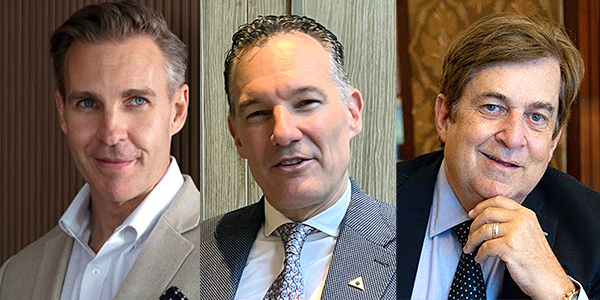
Patrick Both (left) of Kimpton Maa-Lai Bangkok wants to protect the guest experience; Torsten Richter (centre) the new man at Anantara Siam Bangkok, is of similar mind; David Wilson (right) is steering the Waldorf Astoria Palm Jumeirah, Dubai, in challenging times/ photo Torsten: Vijay Verghese Towering over Kimpton guests in immaculately tailored suits, GM PATRICK BOTH (also Director of Operations Luxury and Lifestyle Thailand, IHG) is razor focused: “While price is always a consideration, quality cannot be compromised, particularly in a luxury environment. When it comes to cost management, my view is consistent: anything that directly impacts the guest experience, team member engagement, or revenue generation should be protected.” {Anything that directly impacts the guest experience, team member engagement, or revenue generation should be protected— Both Securing these “core drivers” (as Both puts it) is a view shared by most top hoteliers and GMs across Asia from Dubai and India to the Far East. Over at the iconic Anantara Siam Bangkok (originally a Peninsula) where massive renovations are reverberating through the building mid-May, GM TORTSTEN RICHTER is a trim suited blur as he elegantly steers through daily Vesuvian eruptions and crises of a more immediate nature. His view is similar: “Many brands may feel the pressure to fill rooms regardless. But luxury brands will not reduce offerings on services.” He thinks a moment, then continues: “In any crisis there are opportunities. The long-haul and Middle East market has been reduced but we look at the Southeast Asian market — and to domestic consumers for whom we have restaurants that compete very well in Bangkok.” With a partially open hotel there has been time to pause and take the long view. Across the strait from Iran, at the epicentre of tensions, seasoned Asia hand DAVID WILSON, GM Waldorf Astoria Palm Jumeirah, Dubai, remains phlegmatic and at ease. “As at all hotels we have had to take contingency measures,” he says, “but bearing in mind the need to protect our standards and our guest experience.” He continues: “We’re using the time carefully to conduct necessary maintenance and upgrades and also focusing on training for the team. It’s important that we keep a focus on our service delivery.” While the hotel waits for travel advisories to be lifted, there has been some short term progress. “Expatriates have returned to the city,” says Wilson, albeit cautiously as hostilities ebb and flow, and “the roads are busy again as are the shopping malls and restaurants.” {As at all hotels we have had to take contingency measures... bearing in mind the need to protect standards and our guest experience — Wilson Farther east fortunes have been mixed — the loss of travellers from the UAE and Saudi Arabia (among the top spenders at duty-free along with the Chinese and Indians) has impacted airport throughput and revenues in major cities. But Singapore’s Changi has held its own with total passenger traffic rising by 2.3% first quarter of 2026. Hong Kong International Airport showed a healthy Q1 rise of 14%. Both are beneficiaries of rerouted long-haul travel and a surge in regional demand. 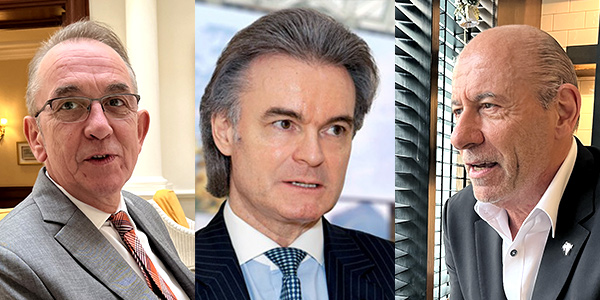
Louis Sailer (left) from the Imperial New Delhi feels loyal staff are the bedrock of service; the MGMs Macau tap into Dr Iwan Dietschi's (centre) vast experience in luxury service; Peter Caprez (right) has seen it all at JW Marriott Bangkok: "Hotel school does not teach how to manage this sort of crisis."/ photos Sailer, Caprez: Vijay Verghese Singapore hotels continued to hold their rates. On a spot check for two weekday nights late May, Mandarin Oriental was at US$465 per night, Fullerton Bay at US$460 and Capella Singapore at US$730. Hong Kong remains high with Mandarin Oriental priced at US$718 a night late May, Regent at US$546, The Peninsula at US$526 and Upper House at a whopping US$1,000. Buoyed by travellers from China, Hong Kong, Philippines, Taiwan, and South Korea, Macau has seen no drop in rates. And with strong domestic demand, New Delhi remains relatively expensive with Taj Mahal New Delhi at US$342 a night and The Oberoi New Delhi at US$469. The experienced LOUIS SAILER, Senior Executive VP for The Imperial New Delhi, a luxury hotel popular for its heady colonial authenticity believes, “Hoteliers should read the market like a weather map: deploy flexible pricing, strengthen partner ecosystems, and broaden segmentation.” According to him, “The bedrock of recovery and the key to guest experience is care for loyal staff.” At The Imperial, front-end interactions are vital. “Honour long-serving staff’s tribal knowledge to guide domestic guest interactions during crises,” urges Sailer. “And equip everyone with crisis-disruption playbooks for practiced continuity.” Hotel staff may well be the right stuff as hotels claw their way back up the charts. {hotels can create top class F&B experiences with local guest chefs using farm to table techniques and local ingredients — Dietschi Dr IWAN DIETSCHI the lion-maned Senior Vice President Hospitality overseeing the MGM COTAI and the MGM MACAU stalks his art-filled hotel corridors with a panther-like purpose, always zeroing in on service excellence. He has no worries about filling rooms and views any perceived ‘crisis’ as an opportunity. “Drive and monetise wellness and quiet luxury,” he advises, while rolling out “unmatched products and programmes to attract top-tier guests seeking reflective, inward-focused wellness retreats.” Building on ideas from his book Mastering Hospitality, Dietschi sees hotels creating top class “F&B experiences employing local guest chefs — utilising farm to table techniques and local ingredients — to highlight the area and its heritage.” He believes this can be matched with “exciting local adventures [in partnership] as staycation packages featuring art, culture and excursions.” At the same time, hotels need to look at “heart of the house efficiencies,” he says, and work to “eliminate waste, especially in areas that do not visibly affect the guests.” He feels hotels might “cross-train and retrain employees to focus on culture, vision, the mission and service [emphasis]; use local sourcing rather than importation; and employ better room management with the closing of unused floors.” While Macau sails on, Thailand saw top drawer hotels drop rates by 50%-70% in the initial stages of the Iran war disruption and late May prices were still fairly soft. Riverside new-look Mandarin Oriental Bangkok had a nightly weekday rate of US$508 with The Peninsula Bangkok (on the more challenging Thonburi side) falling to US$282, reimagined The Dusit Thani at US$334, and conveniently located The Okura Prestige Bangkok at a very affordable US$172 for fast-stepping pin-stripers. Yet, the softening Bangkok hotel rates have been at best a mixed blessing for travellers who have experienced both savings and squeeze. PETER CAPREZ, the long-serving GM at JW Marriott Hotel Bangkok describes it thus: “With hotels [in a crisis] the tendency is for the price to go down. But it’s quite the opposite for the airlines. The demand shifted and airline prices went up. So good for them.” Airlines that picked up the slack as the UAE route was choked off have made hay, but it’s been brutal for passengers. Tickets on Europe-Asia routes rose by 75% in some instances and some business class fares doubled. {The problem is training. We don’t learn in hotel schools how to close during Covid. There are no manuals for an unseen crisis — Caprez Says Caprez: “Change seems to be the only constant. Not only Covid. We are looking now to the East – China, Japan, South Korea and closer by, India and down to Singapore. Certainly not West. That’s geographically. By segment, we realise corporates still need to travel a lot as rising supply chain costs mean a greater need to reconnect [in person with principals] to steer projects.” Ever cerebral and thoughtful, having dealt with a succession of crises over a long career, he puts his finger on a fundamental problem. Training. “We don’t learn in hotel schools how to close a hotel during Covid. We have manuals for natural crises – flooding, fire, earthquakes. There are no manuals for an unseen crisis. Every crisis is individual and has its own challenges and opportunities. Is this a crisis? Yes, when hotels are down double digits.” He pauses, then adds: “The booking window has become so short. The shortest in my career. Often today for tomorrow. Corporates are last minute as well.” Lack of forward planning and forecasting is one reason hotels are feeling the price pressure acutely. Guests are getting more for less — for now at least. 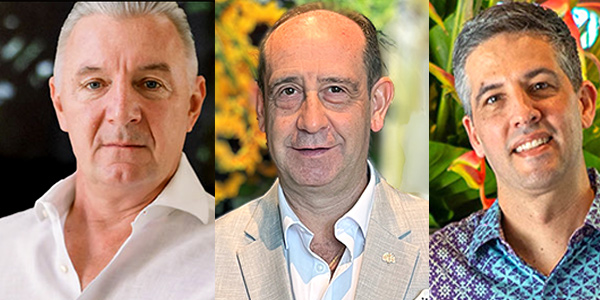
Olivier Gibaud (left) of Twinpalms Phuket believes hoteliers need to be agile; Cavaliere Giovanni Viterale (centre) helming both the Raffles Sentosa Singapore and next door Sofitel "makes memories" for guests; and Marc Walz right from Andaz Bali is looking at loyalty programs/ photo Giovanni Viterale: Vijay Verghese In Thailand, resorts are rolling out new experiences — escorted tours with a photographer to grab an Instagram-perfect snap, ‘mango melt’ massages, and complimentary late night noodles. ‘Stay 3 Pay 2’ offers are commonplace and Dusit even ran a brief ‘Night on Us’ booking programme in April offering one complimentary night for each paid night. Immersive experiences elsewhere range from back-street shopping micro-trawls to chichi ‘sound healing’ in the Himalayas. Star gazing in Dubai may need to wait till the drones are sorted but in India, palace tours are all the rage and in the Indian Ocean and the Philippines, ‘castaway’ experiences and sandbank picnics are in vogue. This is not the first time hotels have dipped into serious invention for guests. But now they’re pulling out all the stops. {Markets and traveller demographics evolve, but authenticity and clarity of identity are what sustain long-term relevance — Gibaud Livewire OLIVIER GIBAUD CEO of Twinpalms Hotels & Resorts, Phuket, believes hotels need management agility and focus. He should know about agility and the fast pivot. Always up for a caper, when big-spending Russians first arrived in Phuket in the mid-2000s hell-bent on partying he set up an instant — temporary — beach ‘club’ with pool to cater for this sudden boisterous demand. It was an idea well before its time that later became de rigueur. “Brand positioning should not shift with every external disruption,” says Gibaud. “A luxury brand must remain anchored in what it fundamentally believes in. Markets and traveller demographics evolve, but authenticity and clarity of identity are what sustain long-term relevance.” Gibaud has heartening words for travellers: “Guest experience remains the foundation of success and should never be diluted because of market conditions. In luxury hospitality especially, perception is everything. Luxury is not only a physical product or spending level; it is the interpretation of an environment, the emotional connection, the sense of care, ease, and belonging.” The consensus is the customer is where it all starts. There’s no point launching a luxury hotel breakfast with 14 kinds of hand-crafted butter from Netherlands only to have it all pulled the following year to be replaced by small foil packets of Anchor butter. And long is the list of lavish buffets that have shrunk over time, not in response to some humungous crisis, but due to cost-cutting pressure from management. Now add a full-blown travel crisis and the magnitude of the operations conundrum becomes apparent. CAVALIERE GIOVANNI VITERALE, Cluster General Manager — Raffles Sentosa Singapore and Sofitel Singapore Sentosa is groomed, avuncular and unruffled. He takes crisis in his stride. Helming the freshly minted Raffles Sentosa villa getaway watched over by a 100-year-old ficus that could tell a tale or two, Viterale remains sanguine: “We ensure that operational efficiencies are maintained while delivering the high levels of service our guests expect from us.” {The definition of luxury has evolved and guests are increasingly seeking authentic experiences that create lasting memories — Viterale According to him, “The definition of luxury has evolved over the years and guests are increasingly seeking meaningful experiences… with a strong emphasis on wellbeing, personalised service, and authentic experiences that create lasting memories.” Bali, the Island of the Gods, has tried to maintain business as usual with travel buoyed somewhat by Indian and Chinese visitors. Yet rates at hotels and villas are dropping. Mulia Resort Bali was running at US$210 a night late May, AYANA Resort Bali at US$263, and The Ritz-Carlton Bali US$348. This would indicate a modest recovery of sorts but there’s no denying European and Arab travel has been severely dented. MARC WALZ, Chief of Village, Andaz Bali, despite his playful sounding title gets straight down to brass tacks. He does not believe in “reacting too quickly to volatility”. His prescription focuses on “doubling down on resilient markets” like Australia and parts of Asia, as well as loyalty programme members; “maintaining rate discipline”; and keeping an eye on “efficiency and productivity, especially in F&B, without compromising the guest experience.” Guests are the clear priority at Andaz where Walz would like to “focus on personalisation, authenticity, and giving guests a strong reason to travel now.” Like Peter Caprez in Bangkok he sees “shorter booking windows that require faster pricing decisions.” 
Suleiman Tunku Abdul Rahman (left) is a Penang Shangri-La old hand who wants "added value" not rate cuts; Hyatt's HK-based Richard Greaves (centre) believes management should lead from the front; while Ruby Garcia (right) from COMO Metropolitan Singapore says luxury travellers are looking for "restoration, sanctuary and emotional connection."/ photos Greaves, Garcia: Vijay Verghese In Penang where hotel prices have dipped with promotional offers popping up by the minute, SULEIMAN TUNKU ABDUL RAHMAN — long associated with both Shangri-Las — feels that along with airline partner and tourism board initiatives “it is best to protect rate integrity and focus on adding value rather than relying heavily on discounts.” The Shangri-Las Rasa Sayang and Golden Sands would need to diversify markets. “We would look into other feeder markets, with less dependence on the Middle East and more focus on India, Singapore, Australia, and domestic travellers,” says the Tunku, a son of the first Malaysian prime minister. “Short-haul travel should be given more attention too,” he continues, “as long-haul demand may continue to remain volatile due to oil pricing and geopolitical concerns.” {Luxury is now more about sanctuary and emotional connection. People need places that make them feel calmer and cared for — Garcia Colourful RUBY GARCIA, the fabulous and formidable GM at COMO Metropolitan Singapore makes an impassioned case for elevated guest experience. “I think luxury hotels have to be careful not to panic-cut through this cycle,” she says. “Guests will forgive higher prices and disrupted travel patterns more easily than declining service or a diminished experience.” Garcia is a constant rustle of activity working her space with ease, a woman at the helm of a hotel with a classy feminine feel. With the changed travel dynamics, she is pivoting towards regional affluents with “personalised experiences that build loyalty.” Garcia underscores this: “To me, the bigger opportunity now is wellness and meaningful experiences. People are exhausted and looking for places that make them feel calmer, healthier and genuinely cared for. Luxury hospitality is becoming more about restoration, sanctuary and emotional connection than pure opulence.” Back end costs from energy to staffing efficiency are being “tightened” carefully “but without the guest ever feeling it.” Ever the cheerful optimist, Garcia is braced for the future and sees much “opportunity for brands that stay disciplined without losing warmth.” {Leadership visibility is important during uncertain times. Guests and colleagues take confidence from engaged management teams — Greaves RICHARD GREAVES, Hyatt’s soft-spoken Managing Director — Classics, Essentials & Inclusive, Greater China, sees ‘instability’ lingering for a while. But he is a strong believer in guarding service standards and rates. “I would not rush into blunt cost cutting or discounting,” he says. “Luxury hotels can damage themselves quite quickly that way.” Instead, this would be a good time for some “operational discipline behind the scenes… looking at energy usage, procurement, scheduling efficiency, marginal F&B operations and any overheads guests do not directly see or value.” Greaves believes hotels must lead from the front and remain agile with an emphasis on “staff culture and training.” As a former floor-pacing GM of the Grand Hyatt Hong Kong, he is keenly aware of the lobby temperature and guest mood. “Leadership visibility becomes critically important during uncertain times,” he stresses. “Guests and colleagues alike take confidence from engaged management teams.” And what are guests looking for? He would agree with Garcia's sentiments regarding guest needs. Says Greaves: “In periods like this, guests tend to value reassurance, consistency, service, privacy and genuine recognition even more than overt luxury.”
NOTE: Telephone and fax numbers, e-mails, website addresses, rates and other details may change or get dated. Please check with your dealer/agent/service-provider or directly with the parties concerned. SmartTravel Asia accepts no responsibility for any inadvertent inaccuracies in this article. Links to websites are provided for the viewer's convenience. SmartTravel Asia accepts no responsibility for content on linked websites or any viruses or malicious programs that may reside therein. Linked website content is neither vetted nor endorsed by SmartTravelAsia. Please read our Terms & Conditions. |