

Sign up for our free monthly news and story alerts |
ADVENTURE Inner Mongolia Hulunbuir guide to reindeer, wetland birds, horsesThe sweeping grasslands of Hulunbuir, transform from green in summer to gold then white with snow in winter. Near the Russian border the Ewenki people at the Aoluguya Reindeer Village offer a peek into herding history. Also see our Hohhot tours report.   SEE ALSO Hohhot Excursions | Zanskar Frozen River Trek | Shanghai Shopping | Chengdu| Hong Kong business hotels | Wild Sandakan | Asian dives | HK Milk Tea and Dim Sum | Trans-Siberian Railway | Manila casino hotels | New Singapore eco-friendly hotels 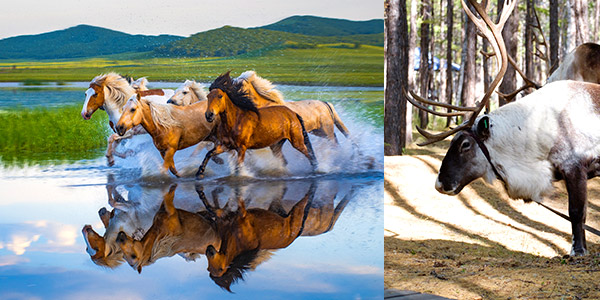
Hulunbuir's spectacular grasslands stretch endlessly in all directions. Spot yurts, horses, Siberian migratory birds and reindeers guarded by the Ewenki people who carry on an ancient herding tradition. JUMP TO Hailar hotels and booking tours | Aoluguya Reindeer Village | Ergun wetlands | Manzhouli a slice of Russia HULUNBUIR may not be a name that rolls off the tongue easily but it is worth getting acquainted with this immense pastureland where Mongol hordes once swept through on horseback raining arrows and destruction on anything in their path. Its vast grasslands with endless sky go from green to gold and then white as the landscape morphs from wetland to freezing desolation and temperatures drop to below -30C. This is when wild horses huddle and reindeer forage for food. 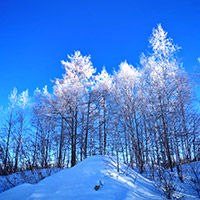
At Aoluguya, the frozen landscap is beautiful and below -30C in winter/ photo: Xi Xi Chan To the east of this sprawling Inner Mongolia prefectural unit — confusingly refered to as a 'city' — in the far north of China, is Hailar with a few direct flights from Hong Kong (Hong Kong Airlines) and other destinations. To the west of Hailar, a comfortable three-hour drive 200km away, lies the idiosyncratic Russian architecture of Manzhouli town — with hints of St Basil's Cathedral, gold-spire domes and a square featuring large nested Russian dolls. A roughly seven-hour drive nort from Hailar on a modern highway brings you to Genhe, another vast 'city' though many will divert and stop en route at the Ergun wetlands where the lazily meandering Morigele River eventually meets the Ergun River that forms the border with Russia for a stretch. Far to the southwest are Hohhot, the capital, and Baotou city. These are separately featured in our Hohhot tours and explorations report. Send us your Feedback / Letter to the Editor About a 20-minute drive from Genhe is the quaint Aouluguya Reindeer Village peopled by the sharply dwindling Ewenki tribe that has developed a close bond with its herds. These are some of the last such herders whose entire lives and economy revolve around their reindeer, from meat and milk to hides, clothing, and transport. Their conical 'tepee' homes (called Cuoluozi) feature silver birch bark, canvas, and hides. Green in summer and crowded with silver birch that thrusts up elegantly into clear blue skies, Aoluguya turns mystic white with the winter snowfall and this is the most magical time to visit, says Hong Kong-based Xi Xi Chan, a barista and an Inner Mongolia enthusiast who also runs the excellent Artistry Brewing Company café in North Point. Sipping a coffee at her green hideaway, talk is all about rugged drives, nights under the stars, big views and fumbling with frozen mittens to get to camera and phone buttons. "It's so dificult in winter," she laughs. She had just returned after a trip with her young daughter in tow. "Your daughter managed the cold?" I ask incredulously. "Of course," says Xi Xi, "She's young and stronger than me." We both chuckle at the prospect of carting teens across the wilderness. In my mind this would be sans-Internet but Xi Xi is quick to correct that misassumption. "This is China," she grins, "everywhere is connected." Hulunbuir offers a beautiful desolation that calms the mind yet quickens the pulse with thoughts of thundering hooves. It was the Chinese Han Emperor Wu who in his wars with the Xiongnu to the north, found allies and horses in Ferghana, Central Asia, around 101BCE. These 'heavenly horses' later helped open up the Silk Road through the 'Gansu Corridor' leading West and enabled the reinvigorated Han cavalry to surge north of the Great Wall with a series of conquests. 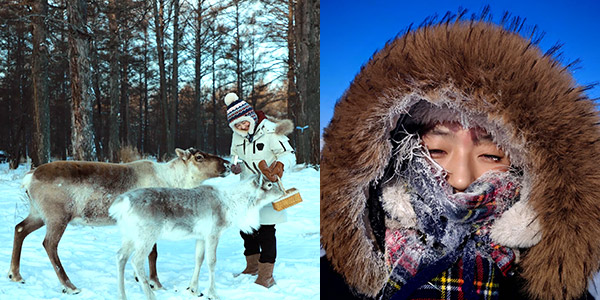
Inner Mongolia aficionado Xi Xi Chan plays with the herd at Aoluguya Reindeer Village (left); while her daughter (right) bundles up against the freezing winter cold/photos: Xi Xi Chan Hailar hotels, tours and driversHailar is the place to get hooked up with a car and driver for a personal six-to-nine-day tour taking in your choice of spots. This is the most common option though guided tours for bigger groups are aplenty. The driver-cum-tour guide will manage everything from your itinerary to accommodation and sightseeing. There are several clean and decent hotels in Hailar though they may not all fit your design aesthetics. Along with quaint yurts (portable tents, or gers) there is a profusion of steel and glass ostentation even this far north in the wilderness. 
Hampton by Hilton Hulunbuir is in Hailar City/ photo: hotel For something familiar sounding in Hailar explore hotel names like Hilton Garden Inn Hulunbuir (hilton-garden-inn-hulunbuir) with smart modern rooms on the banks of the Yimin River; the modestly upscale Hampton by Hilton Hulunbuir Hailar Street (hampton-hulunbuir-hailar) close by the Opera House and Art Museum; the posh sounding and quite decent Bavaria Regent Hotel Hailar (bavaria-regent-hotel) a little away from downtown but with a good hot breakfast and comfy beds; or the popular Hulunbeier Hotel (hk.trip.com). Several international brands and franchises come and go with amazing speed and their websites are often untraceable. Others can only by found on booking engines. Booking tours can be equally confounding. For tour operators offering a range of itineraries, Travel China Guide lists several registered companies. China Discovery does a decent job with well excplained private tour packages around Inner Mongolia as does Silk Road Travel. For a local Inner Mongolia travel agency there's Chaolu that goes by various names. They can organise group outings as well as customised private 5-7-day experiences. Hotels and airlines too have their own local tie-ups. Be careful with maps and spellings. Several informal maps may show misplaced locations. This is more common than you might think. And remember, most tourist spots will charge entry fees. Aoluguya, Ewenki herders and reindeerThe Ewenki (also Tungus) are a Turkic people who are said to have migrated from Lake Baikal Siberia in the 1700s, modernising over time, some even becoming Buddhists and Christians, all heavily mixed with shamanism. They are near mythic in the popular imagination. Somehow they have clung on in the northeast of Inner Mongolia amidst their birch forests of the Greater Khingan Range with their much loved reindeer herds. But times are changing fast. Aoluguya has become a popular tourist draw and a well travelled destination despite its seeming remoteness. For now, its few birch-and-hide Cuoluozi dwellings remain though many younger Ewenki have moved to settlements or larger cities with their modern allure and comforts. 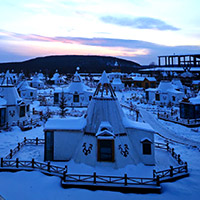
Conical Aoluguya Ewenki homes called Cuoluozi are made from silver birch and hide/ photo: Xi Xi Chan At the reindeer park visitors can get up close with these docile animals, feeding them and donning local garb for photographs. As brief summers slip into autumn, the reindeers start rubbing their antlers against trees and rocks to scrape off the velvet that marked the growing period. The soft nutrition-giving velvet has dried by this stage. This is the point when the antlers have almost calcified into firm bone. Antlers get shed in early winter though female reindeer may keep the antlers till later (so we know which sex does the hard work for Santa's snowy deliveries!). While the velvet is stripped off naturally (an unnervingly bloody sight), jungle herders will step in as well to saw off antlers and scrape off the lucrative velvet for Chinese medicine. Yet in the park, tourists are largely shielded from the gore. Remarkably, the reindeer grow a fresh set of antlers within just five to six months of losing their old set. 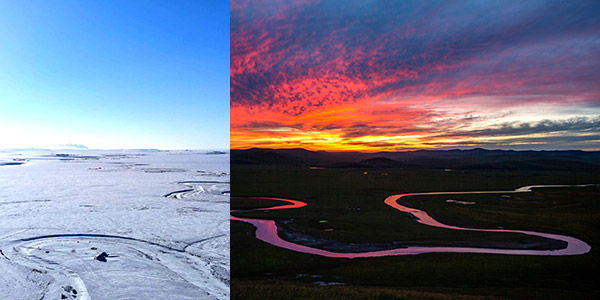
The Morigele River makes sweeping meanders through the Hulunbuir pastureland, eventually meeting the Ergun River in the wetlands. It is a stunning sight in summer and, frozen, in winter/ Frozen river photo (left): Xi Xi Chan The Ewenki like to consume their reindeer meat boiled, air dried, or even raw, with salt and no spices. Fortunately for visitors, a range of flavourful food is available in Genhe ranging from hearty hot pots and savoury dumplings to noodles, lamb stews and venison dishes along with the local hot-stones barbecues. You will likely sample milk teas featuring rich high-fat and nutrient-heavy reindeer milk with salt. This milk is normally considered safe for those who are lactose intolerant. Chinese teas on the other hand will be sweeter and heavily flavoured. 
Close-up of Ewenki Tribe Cuoluozi dwelling made from birch and hide For those who prefer winter distractions closer at hand, or after their round of reindeer visits, the Hulunbuir Ice and Snow Naadam Festival runs through winter in Hailar District on the frozen Yimin River. This accessible extravaganza (not to be confused with the better known ice sculptures in Harbin farther east in Helionjiang), features ice slides, horse racing, wrestling, archery, heated yurts, food, and encounters with herders. While the actual location may shift a little bit based on the ice conditions on the river, the activities are all a very short taxi ride from Hailar City. The Grand Nadaam Festival runs in summer, peaking in July, at various grassland locations. This largely focuses on horse races, wrestling and archery. Several Nadaam events occur in Hailar and Manzhouli too. Meanders around the Ergun wetlandsThe 1.5m hectare Ergun Wetland Park, described as one the most beautiful, encompasses meandering rivers (of which the Morigele and the Ergun are the most spectacular), grasslands, and expanses of the Greater Khingan Mountains. The much photographed Morigele River flow northwest through Hulunbuir till it merges with the Ergun. You need to be at some elevation (or equipped with a drone camera) to truly appreciate the majestic meanders as the rivers traverse the area. The summer months June to October will be the most rewarding for photographers in search of colour but in winter the land has a romantic, if harsh intensity, as it settles into endless white. The big skies offer incredible pink and red hues at sunset and clear nioght skies for snapping stars and constellations. If you've ever wrestled with photographing the Milky Way, Inner Mongolia offers some of the most spectacular opportunities with gin-clear night skies. 
Wetland meanders can be photographed from raised 30m-high platforms The wetlands run from riverine areas and marshes to forested areas encompassing assorted water formations — including horseshoe lakes — and impenetrable swamps that are home to a range of birds both local and migratory, and local fauna. Birdwatchers will be on the lookout for geese, tundra swans, Siberian cranes, red-crowned cranes, black storks, ducks, herons, and other birds making winter journeys to the south. In the area, visit Russia-influenced border towns like Shiwei, the Wetlands Museum, silver birch forests, Egret Island, and the raised platforms rising up from wooden walkways that dramatically present the sweeping panorama from a height of about 30m. From Shiwei there is a slightly longer northern route to Aoluguya Reindeer Village. This is about a six-hour drive. 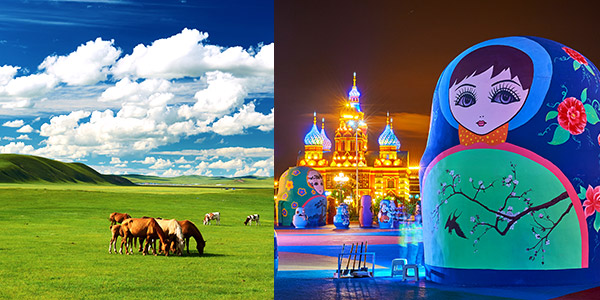
Hulunbuir grasslands (left) are peppered with horses that were brought from Central Asia to form the backbone of the Mongolian cavalry; (right) Matryoshka Square nested dolls in the Russian border town of Manzhouli An evening with Russian dolls? Why not?A three-hour drive from Hailar due west towards the Russian border brings you to the quaint Russian township of Manzhouli with the aforementioned candy-striped spires and gold domes. A big draw here is Matryoshka Square with its giant nested dolls where you might recognise a face or two. No Soviet realism here, just marshmallow buildings with marzipan towers in pink, blue and red turning the whole place into a Disney escape. Despite being a frontier town right on the border, parts of Manzhouli will strike visitors as more a theme park than a serious rough-and-tumble city and herein lies its charm, full of whimsy and colour with a random mix of Mongolian, Chinese and Russian influences. Matryoshka Square is a popular spot for Insta selfies, especially at night when the lights come on and the great dolls spring to life if you let your imagination run. 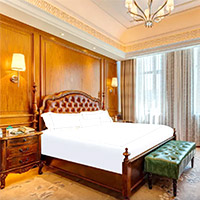
The Hulunbeier is a popular Hailar City base for tours to Hulubuir/ photo: hotel The large hard-to-miss circular red building will puzzle some at first glance but it is in fact an elaborate permanent structure for the circus and features classic acts from Russia. Apart from folksy songs and dances, the city offers several authentic Russian restaurants. Pedestrian Street is the place for souvenirs — amber costume jewellery, nested dolls of course, shawls, silk, and heavy lined winter boots. Strolling down this broad artery the city assumes a more formal look with office blocks and classic Russian buildings. Blink and you could be wandering down Shanghai's Nanjing Road sans the frantic neon. Hulun Lake, one of the two vast spreads of water that give the prefecture its name, is a 50km hour's drive from Manzhouli and worth a visit. If you're lucky you might even spot one of its white stretches of beach with designated swimming areas in summer (June to August) when the mercury can climb to a little over 30C. The lake also offers boating and fishing and the obligatory BIG sunrises and sunsets. All in, Hulunbuir offers an exceptional summer or winter grassland experience. Hohhot in south-central Inner Mongolia is the capital. A little farther southwest at Ordos, enclosed by the 'Great Bend' in the Yellow River north of the Wall, is where Genghis Khan's cenotaph is located. The desert lies to the west. The fate of Chinggis (as the name is locally pronounced) remains an enduring mystery as his actual burial site — believed to be in the northern Khentii Mountains at Burkhan Khaldun in Mongolia — has never been discovered. Folklore has it, everyone associated with the burial was later executed. And that wraps up our Inner Mongolia guide to the Hulunbuir grasslands, reindeer herders and quaint Russian frontier towns where time stands still. Find all-weather adventure here and Big Skies.
NOTE: Telephone and fax numbers, e-mails, website addresses, rates and other details may change or get dated. Please check with your dealer/agent/service-provider or directly with the parties concerned. SmartTravel Asia accepts no responsibility for any inadvertent inaccuracies in this article. Links to websites are provided for the viewer's convenience. SmartTravel Asia accepts no responsibility for content on linked websites or any viruses or malicious programs that may reside therein. Linked website content is neither vetted nor endorsed by SmartTravelAsia. Please read our Terms & Conditions. |